
Things to Know Before Visiting St. Martin Island
If you’re dreaming of turquoise water, gourmet food, and beach-hopping across two cultures in one day, St. Martin is pure magic. But this unique Caribbean island has a few things that first-time visitors should know. Here’s your friendly guide to help you travel smarter, avoid surprises, and soak up the best of both the French and Dutch sides.
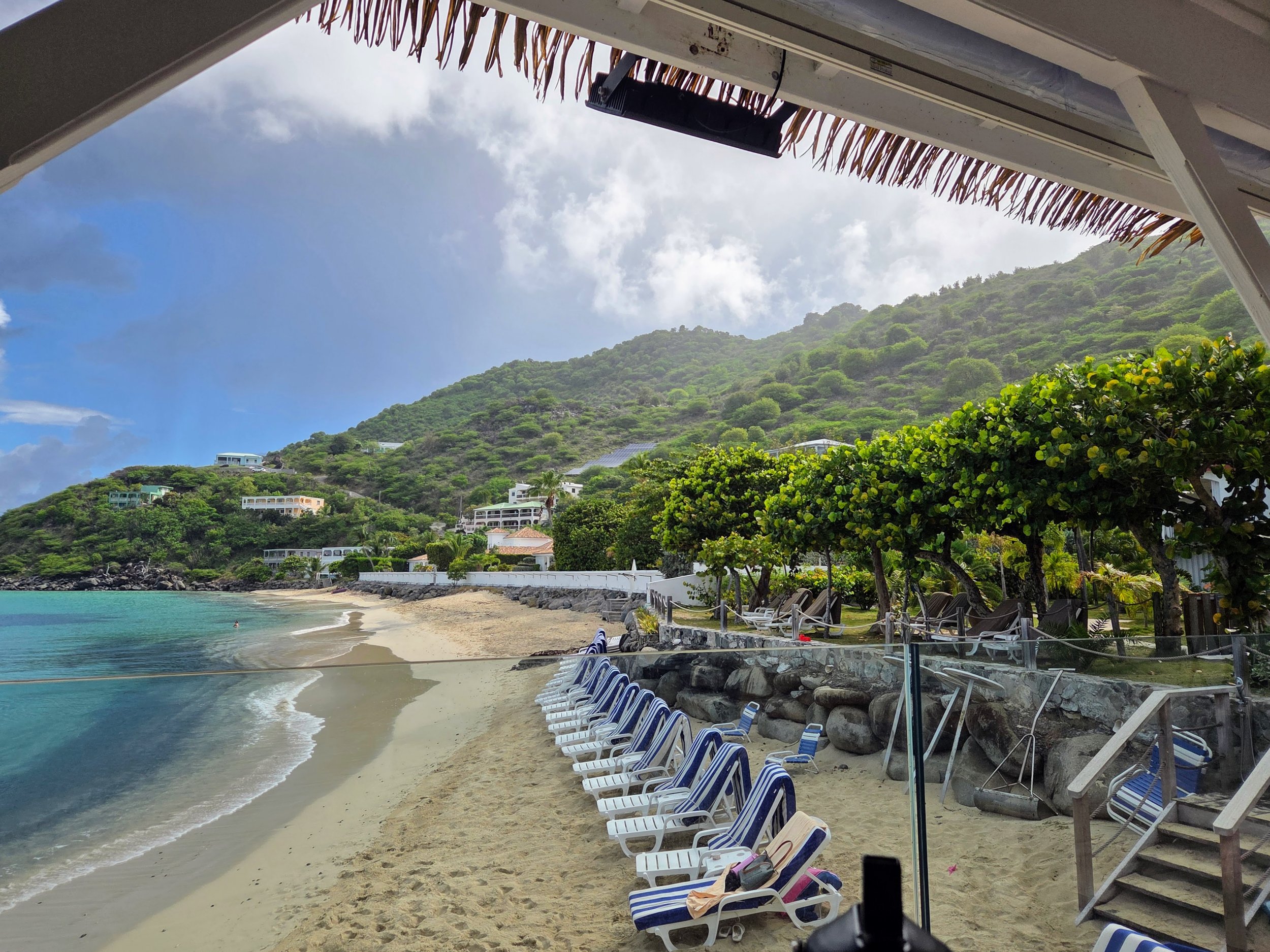
The view from our hotel breakfast table @ Grand Case Beach Club in Grand-Case, St Martin (French side)
1. It’s One Island, Two Countries
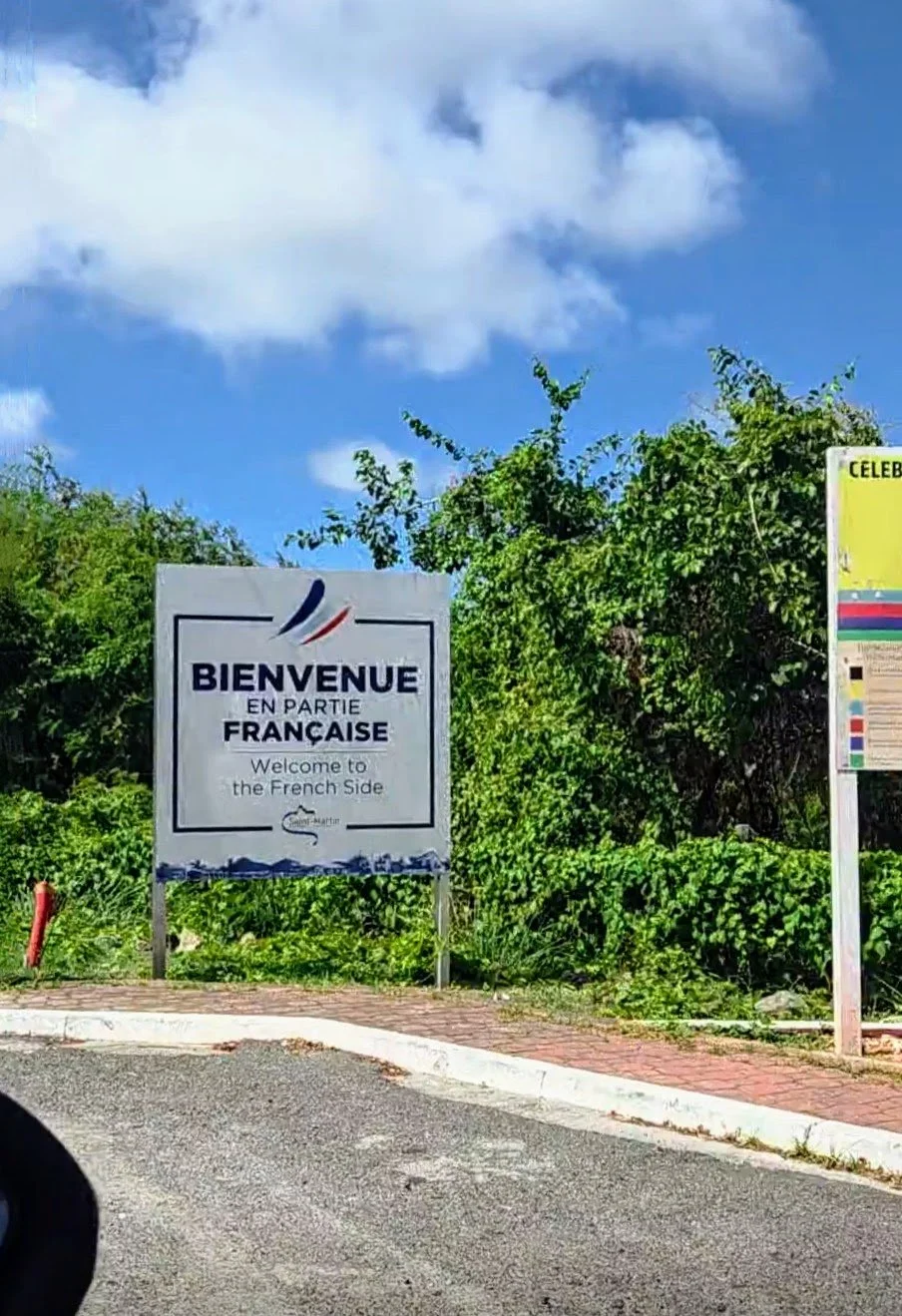
St. Martin is split into two nations: the Dutch side (Sint Maarten) and the French side (Saint Martin). This is one of my favorite things about it. There’s no physical border—just a sign as you drive across so you can easily experience both cultures in one trip! Be aware that as soon as you cross that border, there’s a language switch.
Quick difference:
Dutch side → speaks English, livelier, cruise port, nightlife, beautiful beaches
French side → quieter, gourmet dining, boutique beaches
2. You Land Practically on the Beach
Flights arrive at Princess Juliana International Airport, famous for low landings over Maho Beach. If you can pick your seat, make sure to sit on the left-hand side of the plane; it’s typically the best spot. You’ll see people spread out along the beach and the sea waving!
Plane-spotting here is iconic…Trust me! You don’t want to miss this experience—but be careful: there is a sign warning of jet blast from departing aircraft. It is powerful and dangerous.
If you’re visiting the beach and want to experience the planes flying right above you, check out arrivals while you chow down at the Sunset Bar & Grill right on the beach. They have a surfboard with a list of arrivals as soon as you walk in.
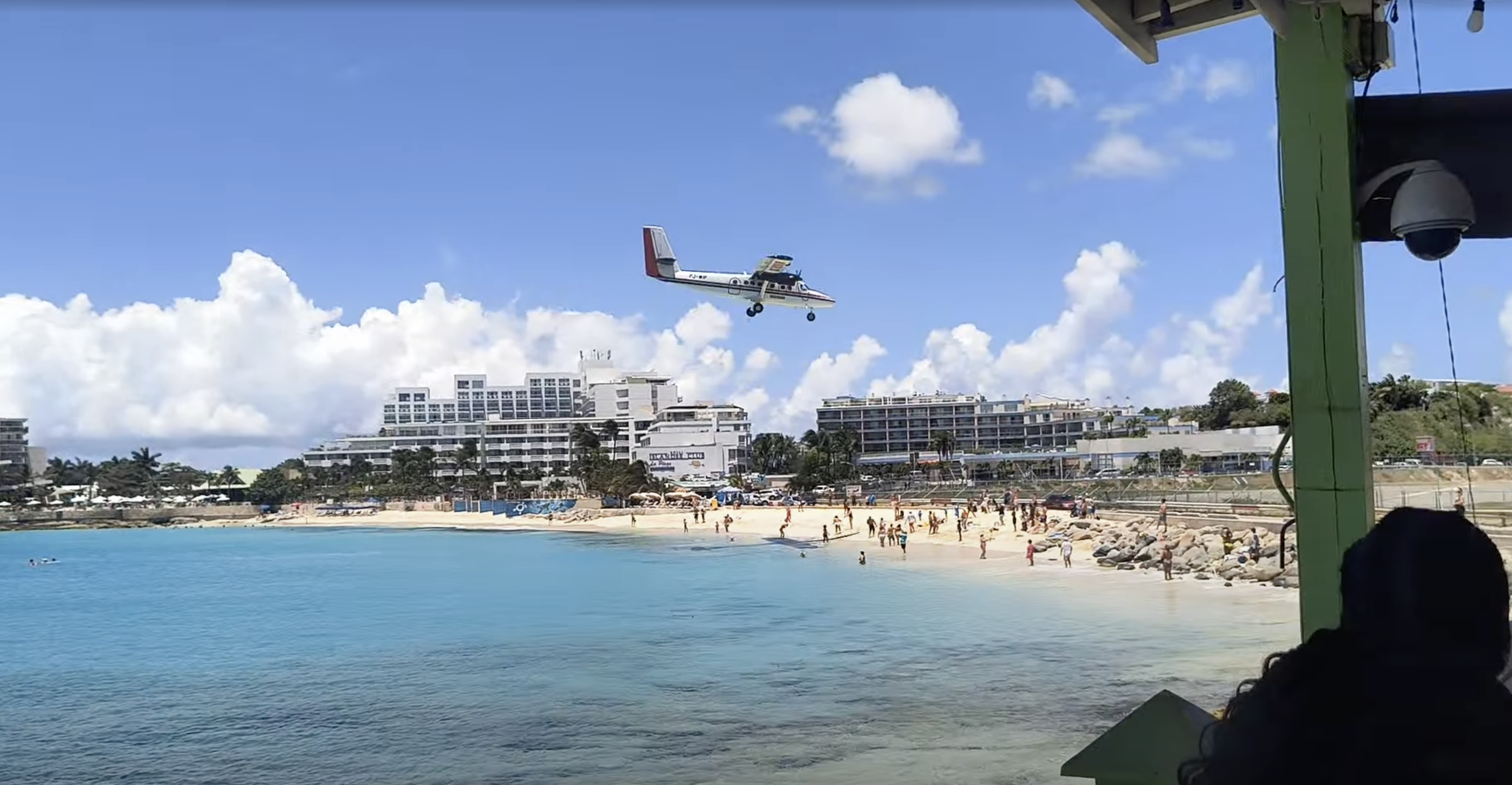
Our view from Sunset Bar & Grill as a plane lands behind Maho Beach
3. Two Currencies (But USD Works Almost Everywhere)
Dutch side: Netherlands Antillean guilder (USD widely accepted)
French side: Euro (USD also commonly accepted)
You can usually pay in dollars island-wide, but small French cafés may prefer euros or exact change. A local cafe on the French side did accept tap-to-pay as well.
4. Driving Is the Best Way to Explore
Taxis are expensive and distances add up fast. This island is only 35 square miles, so you can drive around in about an hour to an hour and a half. Renting a car lets you beach-hop and dine freely, especially if you want to explore the other side of the island (trust me, you do!), depending on which side you stay on. Driving is on the right side; like the United States.
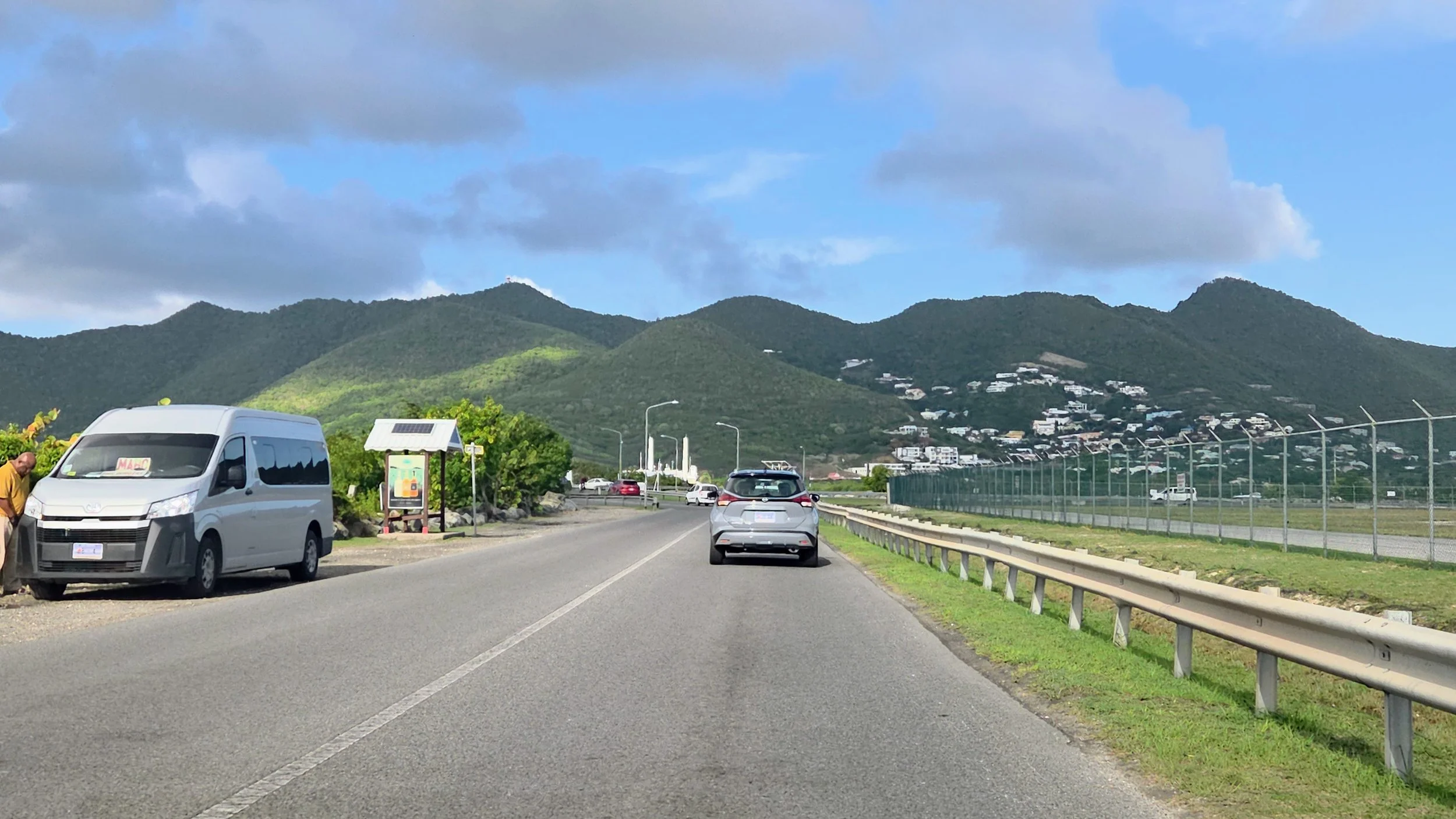
Headed towards our hotel on the French side
5. Beach Styles Vary
Each side has a distinct vibe: Dutch beaches are more resort-style, busy, watersports while French beaches are natural, scenic, relaxed. Some French beaches are clothing-optional (especially Orient Bay’s southern end), so be aware if traveling with kids.
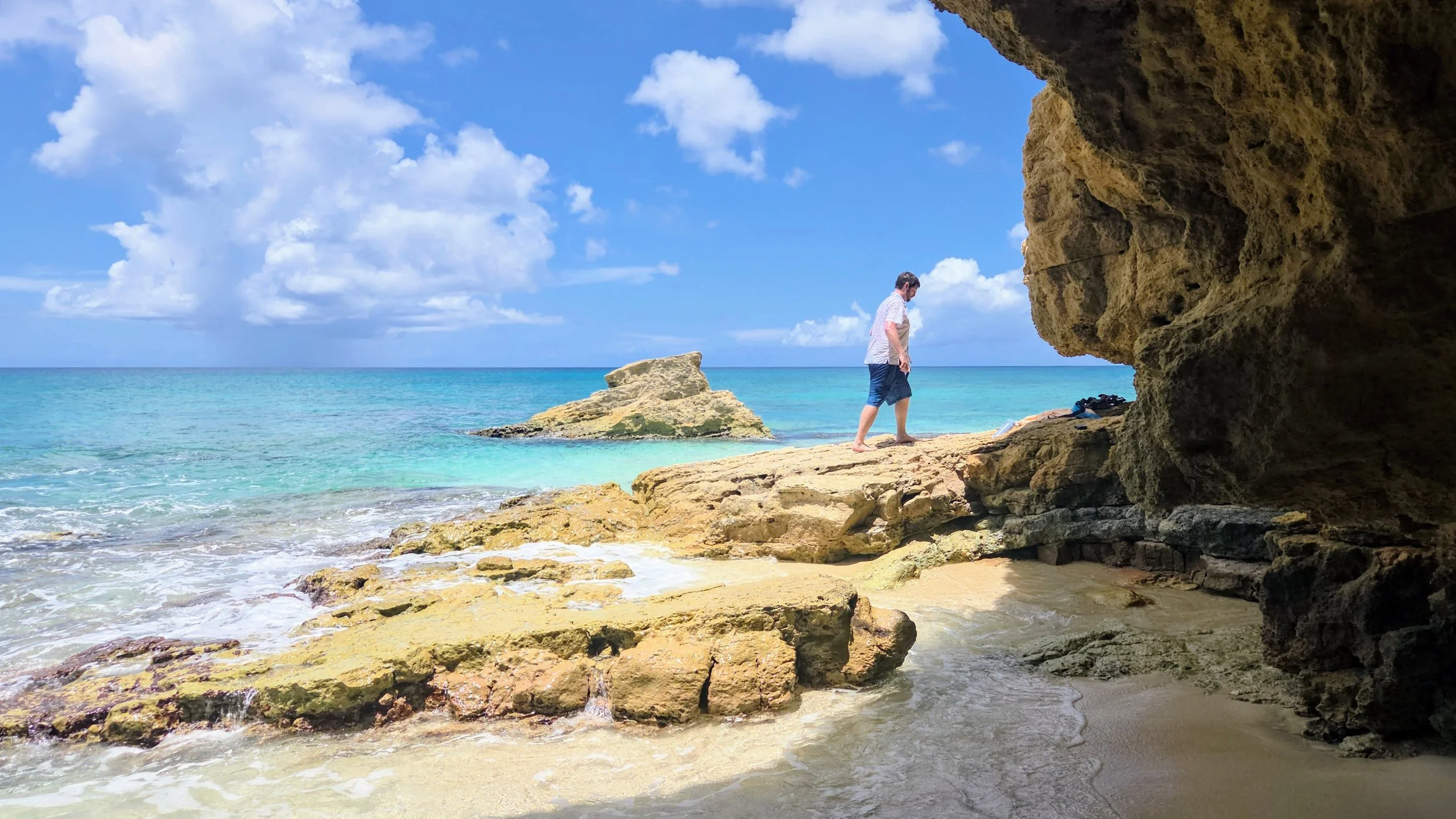
Exploring Cupecoy Cave in St. Maartin (Dutch side)
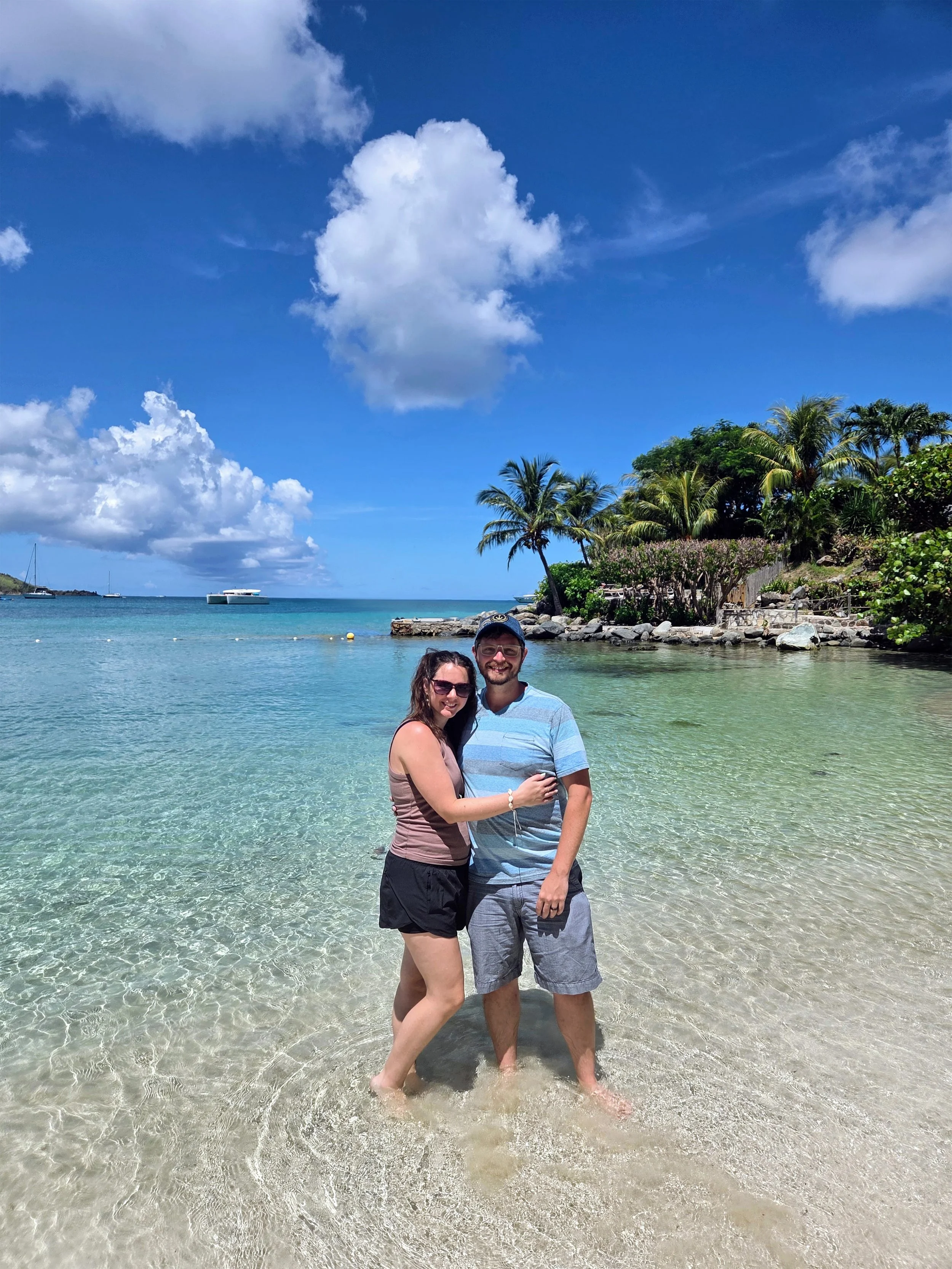
The beautiful, calm waters at our hotel on the French side
6. Food Is a Huge Highlight
The French side is known as the “Culinary Capital of the Caribbean.” Don’t miss dinner in Grand Case—lined with gourmet restaurants and beachfront “lolos” (local barbecue shacks). I highly recommend Cynthia’s Talk of the Town where you can get budget-friendly but delicious barbecue ribs and seafood!
7. Sundays & Siesta Culture on the French Side
Many French shops and restaurants close Sundays and afternoons. The Dutch side stays open longer and has more nightlife.
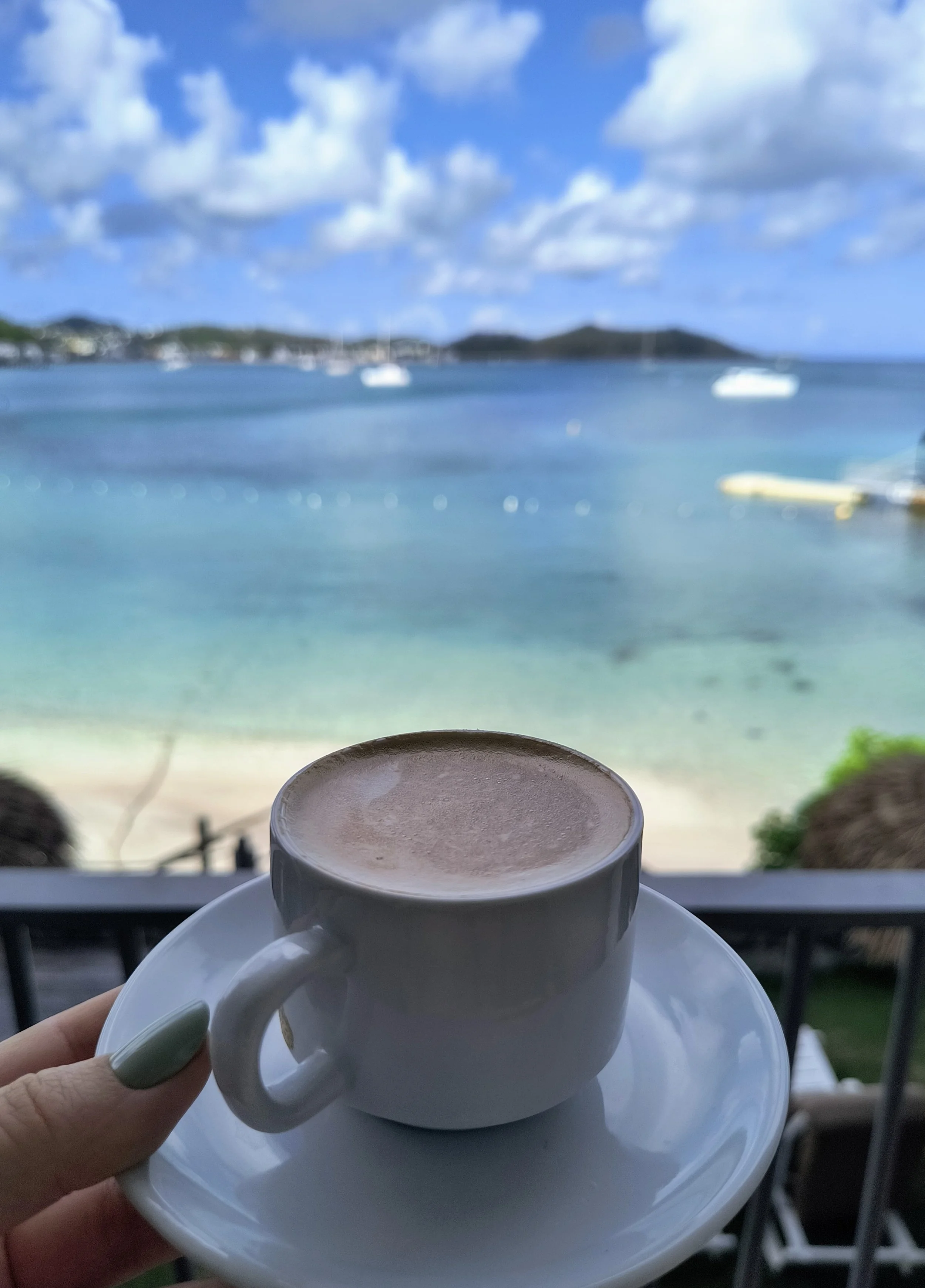
Enjoying an espresso on our beautiful balcony @ Grand Case Beach Club we booked for $0 with points
8. Cruise Crowds Affect the Dutch Capital
When ships dock in Philipsburg, the town gets busy with shoppers. Visit early morning or on a non-cruise day for a calmer experience. Our trip was during Labor Day weekend, and it was not busy on the beaches at all!
9. Hurricane Recovery Is Ongoing (But Tourism Is Strong)
Hurricane Irma (2017) caused major damage. Today, most beaches, resorts, and restaurants are fully restored, but you may still notice rebuilding in some areas. Neighborhoods throughout are also not developed as well as maybe some other islands or big cities.
10. Tap Water Is Safe to Drink
The island uses desalinated seawater, which is clean and potable. Bottled water is optional, not necessary.
11. Expect Roosters, Goats, and Island Roads
Something I thought was a unique and fun experience while we drove around were the animals. You’ll encounter roaming goats, crowing roosters, and lots of steep hills and winding roads. But don’t worry! Just drive safe and take curves slowly.
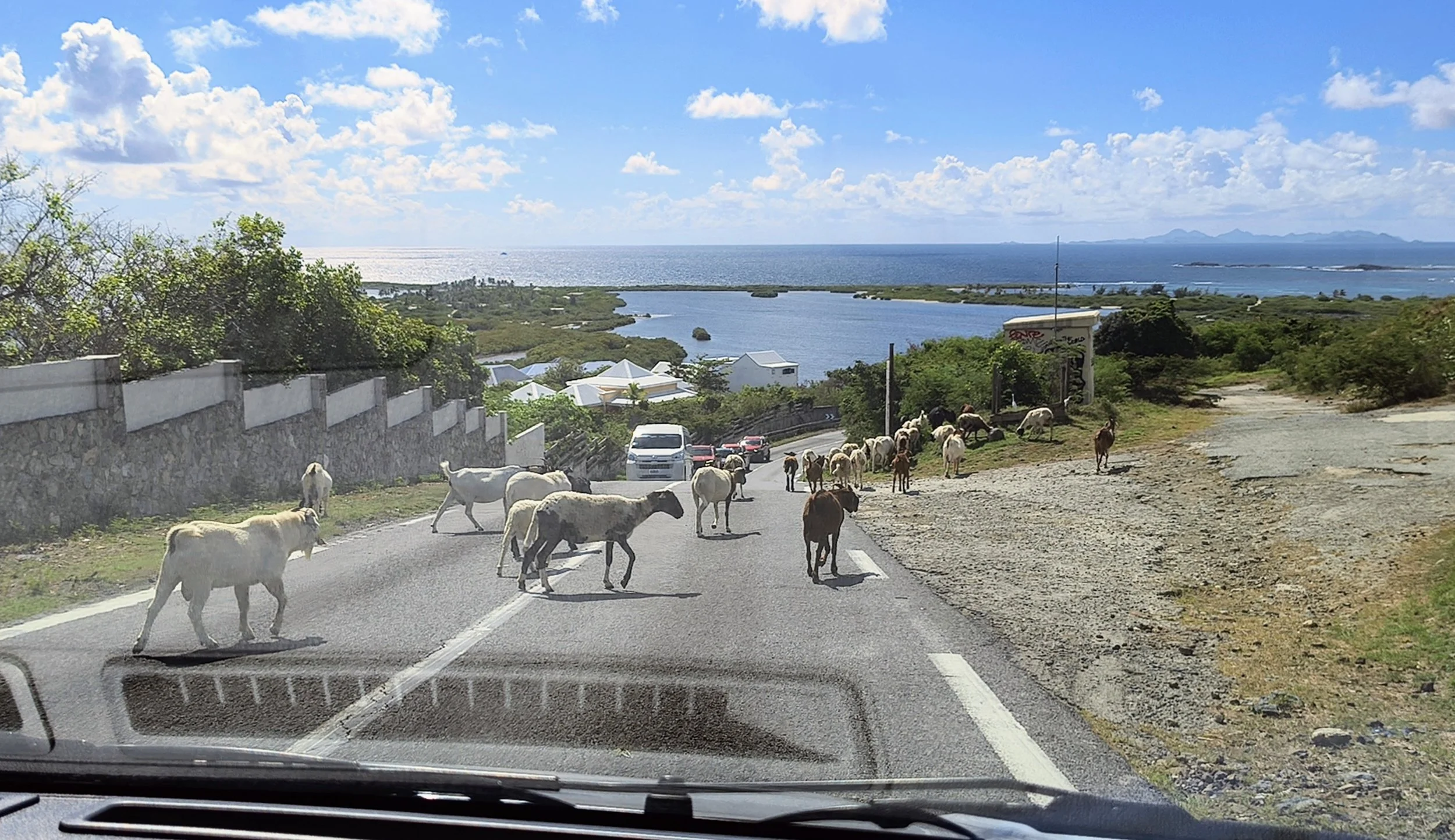
A quick detour as we headed to the Dutch side for our excursion…😂
12. You Can Experience Europe in the Caribbean!
St. Martin feels different from many Caribbean islands: French bakeries and wine, Dutch architecture and casinos, and Caribbean beaches everywhere. The water is among the most beautiful I have ever seen!
Few places let you eat croissants for breakfast, snorkel at noon, and stroll the streets after dinner and see cats everywhere like you’re in Greece—all without leaving one island.
Final Travel Tip
The magic of St. Martin isn’t choosing one side—it’s enjoying both. Spend days exploring beaches and villages across the island, then decide which vibe you love most. With points and miles, you can take multiple trips to see how you love it! ;)
We highly recommend this island as there is much to do, and we felt very safe at our hotel, walking down Grand Case beach, and exploring the shops and beaches around the island!
To find out more about things to do, places to see, and food to devour on your trip, check out this website.
